

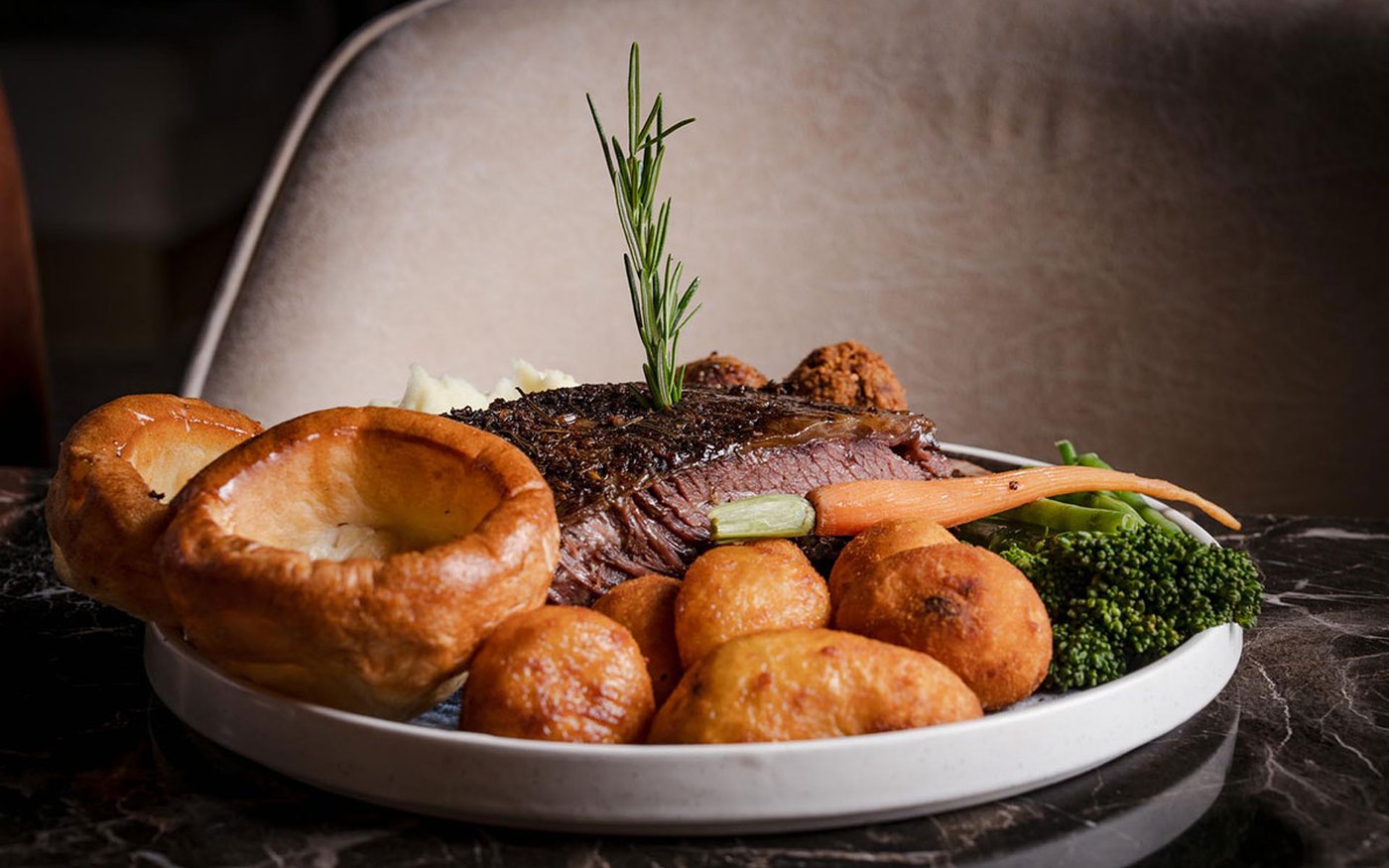
Certified Halal Wagyu & Tomahawk Steaks in Birmingham
Marbling you can see, a crust you can hear, halal you can trust — Birmingham’s home of halal wagyu and the 1kg tomahawk.
The Science of Marbling: Why Decorum’s Halal Wagyu Melts in Your Mouth
Wagyu’s intramuscular fat renders at a lower temperature, basting each bite from within — that’s why every halal wagyu steak in Birmingham served at Decorum has that signature buttery finish.
Our Premium Steak Portfolio: Ribeye, Sirloin, Fillet & The 1kg Tomahawk
Beyond wagyu: a full portfolio of premium cuts from our steak menu — sirloin (£30), ribeye (£32), fillet mignon (£39) and the show-stopping tomahawk (£68). Every cut is HMC-certified halal.
Himalayan Salt Dry-Aging Chamber & High-Heat Sear Technique
Our 28-day dry-aging concentrates flavour and tenderises the grain; the grill then delivers a high-heat sear with a medium finish we recommend for every cut.
Chef’s Recommendations: Accompaniments, Truffle Chips & Peppercorn Glaze
Pair with peppercorn, mushroom or signature sauce (+£3 per extra pot), skin-on fries, seasonal veg and sharer sides — ask our team for the full list of sides and pairings.
Is your wagyu actually halal-certified?
Yes — all beef including wagyu, sirloin, ribeye and fillet is sourced exclusively from HMC-certified halal suppliers.
How should I have my steak cooked?
All steaks are recommended to be cooked medium — it’s the sweet spot where dry-aged beef tastes its best.
Hungry yet?
Reserve Online or call 0121 820 8635
Further Reading
- the definitive guide to halal steak in Birmingham
- why HMC certification matters for steaks
- dining occasions in Birmingham
- what HMC certification means
Wagyu Marbling Scores Explained: What BMS and MB Actually Mean
Marbling is the fine lace of fat running through the muscle, and it is the single number that separates wagyu from an ordinary steak. Two grading systems get used in the UK trade, and they do not share a scale:
- Japanese BMS (Beef Marbling Standard) runs from 1 to 12. A5 wagyu sits at BMS 8–12 and is the richest grade sold commercially.
- Australian MB (Marbling Score) runs from 0 to 9, where MB 9 is the top of the scale.
Ask your server for the current grade on the board, because it changes with the season and the cut. A higher score is not automatically better: past a certain point the fat dominates and a smaller portion is the right choice. That is why our wagyu is served as a rich centrepiece rather than a plate-filling steak.
The reason marbling matters so much is chemistry. Wagyu fat carries a higher proportion of oleic acid, which gives it a lower melting point than conventional beef fat. It starts rendering at a temperature close to the steak’s own surface heat, so instead of sitting on the outside of the meat it bastes each fibre from within. The result is the texture guests describe as buttery — and the reason a wagyu steak should never be cooked past medium.
Inside the 28-Day Dry-Aging Chamber
Every steak on our board is dry-aged for 28 days in a Himalayan salt chamber. Three things happen in there at once:
- Moisture loss. Water leaves the muscle, so the flavour that remains is concentrated rather than diluted.
- Enzymatic tenderising. The cut’s own enzymes break down connective tissue, which is why a 28-day ribeye eats more softly than a fresh one.
- A dry crust. The outer surface forms a firm, nutty layer that caramelises fast on the grill and gives the steak its audible crust.
The salt walls are not there to season the meat. Himalayan salt is hygroscopic — it pulls moisture out of the air and holds the chamber at a stable, low humidity, which is exactly the condition dry-aging needs. Get the humidity wrong and you grow the wrong kind of crust; keep it stable for 28 days and you get the deep, savoury note that makes a dry-aged steak taste like itself, only more so.
Wagyu, Tomahawk, Ribeye or Fillet: How to Choose
Our steak board covers four very different eating experiences, all HMC-certified halal:
- Wagyu — the richest, most marbled option. Order it when the steak is the event, and expect a smaller, denser portion.
- 1kg Tomahawk (£68) — the long bone, the theatre, the table-side reaction. Built to share between two or three.
- Ribeye (£32) — the best balance of marbling and beef flavour for a single diner.
- Fillet mignon (£39) — the leanest and softest cut on the board.
- Sirloin (£30) — the classic: a firm bite, a proper crust, and the cut our signature steaks are built on.
Every steak is recommended medium. That is not a house rule for convenience — it is where 28-day dry-aged beef gives up its flavour most completely. Ask for medium-rare and the centre stays cool; ask for well-done and you cook out the marbling you are paying for.
Ordering Well: Sauces, Sides and Resting
Steaks arrive with a choice of peppercorn, mushroom or signature sauce, and extra pots are £3. Skin-on fries, seasonal vegetables and our sharer sides are the usual partners — the mac & cheese and the sweet potato fries are the two most-ordered sides with wagyu. A steak needs five to eight minutes off the heat before it is carved; that rest is when the juices redistribute, and it is the difference between a steak that bleeds onto the plate and one that does not.
Halal Wagyu Questions, Answered
What does the marbling score actually tell me?
It tells you how much intramuscular fat is in the cut and how finely it is distributed. Higher scores mean a richer, softer, more buttery steak and a smaller portion; lower scores mean more beef flavour per bite and a firmer texture. Neither is better — they suit different appetites.
Why dry-age for 28 days instead of longer?
Twenty-eight days is where tenderness and concentrated flavour peak without the crust turning overly funky. Longer aging pushes into gamey, blue-cheese territory — a taste some guests love and most do not. We age to the point where a first-time guest and a steak regular both get what they came for.
Can two people share the tomahawk?
Yes — the 1kg tomahawk is designed for two, and three people can share it comfortably alongside starters and sides. Ask the team to carve it for the table.
How is wagyu different from a standard ribeye?
A standard ribeye carries its fat in a single eye of marbling and around the edge; wagyu carries it in a fine web through the whole muscle. That web is why wagyu eats softer and richer at the same doneness, and why it is served in a smaller portion — the fat does the work that volume normally does.