

Halal Sunday Roast in the West Midlands: What to Check Before You Book
Halal Sunday Roast in the West Midlands: What to Check Before You Book
Ordering a halal Sunday roast sounds straightforward: halal meat, roast potatoes, gravy, done. In practice, a traditional British roast is one of the hardest plates in the country to make genuinely halal — because the parts that make it taste like a roast are the parts most likely to be non-halal.
Here is what actually goes into a halal roast, and the five questions worth asking before you book anywhere in Birmingham or across the West Midlands.
The problem is not the meat. It is everything around it.
A standard roast dinner carries at least four hidden risks:
- Gravy. Classic gravy is built on meat stock and often finished with a splash of wine or a pan deglazed with alcohol. Even alcohol-free gravy may be thickened with a roux made from animal fat.
- Yorkshire puddings and batter. Usually flour, egg and milk — safe. But some kitchens use beef dripping for the tin, and the dripping is rarely certified.
- Stuffing and sausagemeat. Pork is the default in British stuffing. Where it is not pork, the sausagemeat still needs a certified supply chain.
- Roast potatoes and shared fryers. Potatoes roasted in dripping, chips fried in the same oil as non-halal items, and vegetables finished in a pan that held pork.
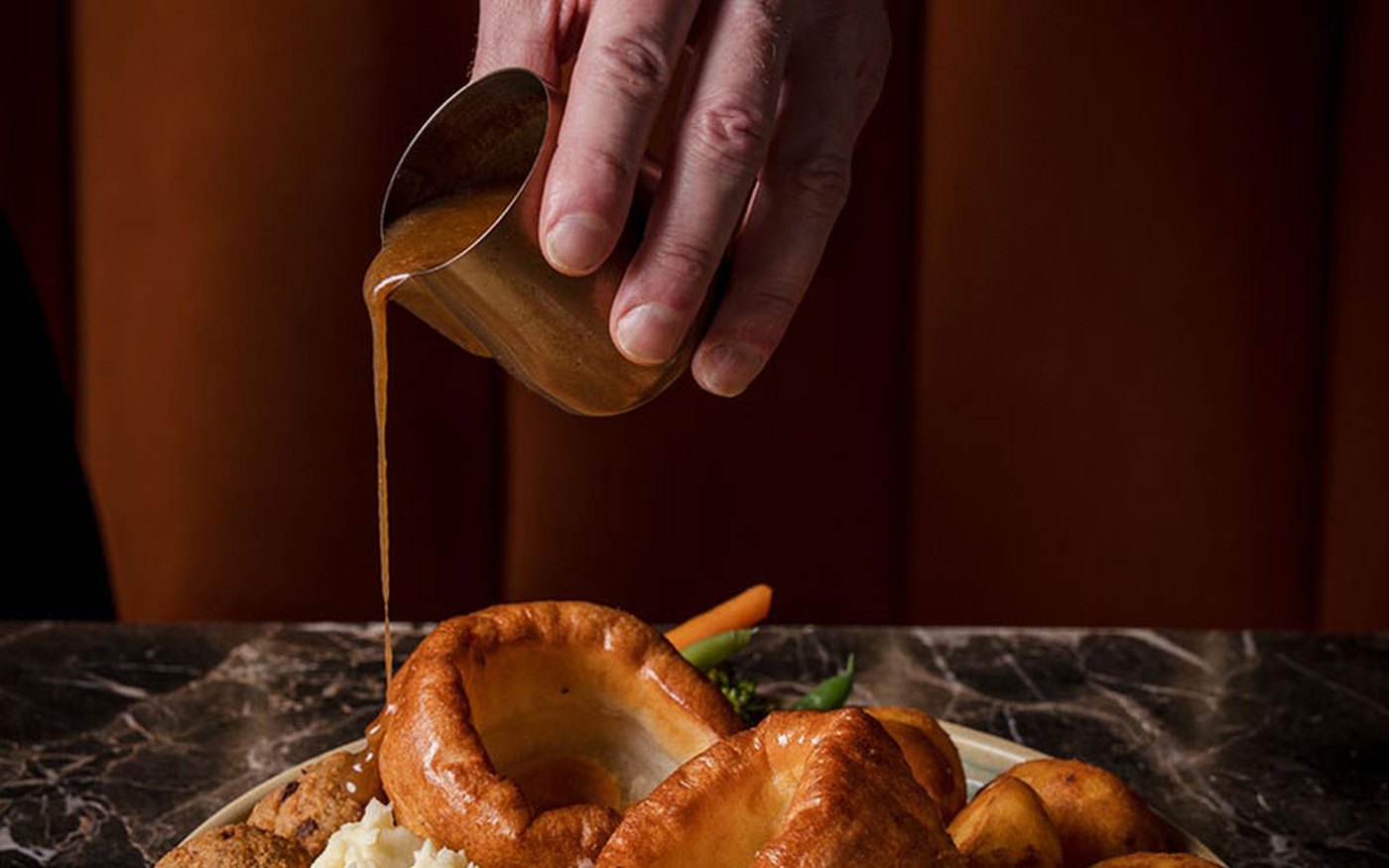
- The gravy jug on the pass. A shared jug, a shared ladle, a shared spoon rest.
None of that is visible from the dining room. Which is why the only reliable answer to “is your roast halal?” is not “yes” — it is “the whole kitchen is certified.”
1. Ask which certification body audits the kitchen
In Birmingham, the answer most families look for is HMC (Halal Monitoring Committee). HMC certifies the premises and audits the supply chain, including how meat is stunned and slaughtered, rather than issuing a certificate to a supplier and leaving it at that.
A useful distinction, explained properly in our guide to what HMC certification means:
- “Halal meat supplier” — the meat is halal, the kitchen is not audited.
- “Halal menu” — some dishes are halal, others are not, and equipment is shared.
- “HMC-certified premises” — the kitchen, the supply chain and the handling are all audited.
For a roast, only the third one removes the gravy question entirely.
2. Ask what is in the gravy — and take the answer seriously
A halal roast stands or falls on gravy. A kitchen that can tell you exactly how it is made — roasted halal bones, no wine, no animal-fat roux, thickened with cornflour or a halal-certified roux — has thought about it. A kitchen that says “it’s just gravy” has not.
3. Ask about the trimmings, not just the joint
The joint is the easy part. Ask specifically about:
- Yorkshire pudding fat
- Stuffing and sausagemeat
- Roast potato fat
- Whether chips share a fryer with non-halal items
- Cauliflower cheese and any cream-based sides
If a venue serves a mixed menu — halal and non-halal in one kitchen — every one of these becomes a cross-contamination question.
4. Check the timing, because a roast is a schedule
A Sunday roast is a timing dish: the joint rests, the potatoes go in, the Yorkshires rise and fall. Venues that serve roast “all day” often reheat. Ask when the roast is served and whether it is carved to order. At Decorum the roast runs every Sunday from 2pm, carved from the joint rather than plated in advance.
5. Confirm the drinks situation
A roast in a pub garden usually means a bar. For many families, an alcohol-free venue is the reason they can book at all — no bar tab, no wine list at the table, no awkwardness. It is worth confirming rather than assuming.
What a properly halal roast looks like
At Decorum, the Sunday roast is built the long way round: dry-aged halal sirloin of beef, slow-roasted chicken, lamb shank or beef ribs, with roast potatoes, mashed potatoes, seasonal vegetables and a giant Yorkshire pudding, all finished with halal gravy. Everything on the plate is HMC-certified and the venue is entirely alcohol-free — the roast is served every Sunday from 2pm in the Jewellery Quarter.
See the halal Sunday roast menu in Birmingham for the current cuts and prices, or book a table for a Sunday sitting. If you are still deciding between venues, our 2026 guide to the best halal restaurants in Birmingham covers the wider shortlist.
The five-question checklist
Before you book any halal Sunday roast in the West Midlands:
- Which certification body audits the kitchen — and is the whole kitchen covered?
- What is in the gravy, exactly?
- What fat are the potatoes and Yorkshires cooked in?
- Is the roast carved to order, and when is it served?
- Is alcohol served on the premises?
Five questions, one phone call, and no surprises on the plate.
FAQs
Is a Sunday roast usually halal?
No. Traditional roast gravy, stuffing, Yorkshire pudding fat and roast potatoes frequently involve pork, non-certified meat stock or alcohol. A halal roast requires a certified kitchen, not just a halal joint.
What does HMC certification mean for a roast dinner?
HMC certifies the premises and audits the supply chain, so the meat, the stock, the fats and the handling are all covered — including shared equipment.
Which meats are on a halal Sunday roast?
Common choices are roast sirloin of beef, slow-roasted chicken, lamb shank and beef ribs. Decorum serves all four, HMC-certified, every Sunday from 2pm.
Do I need to book for a Sunday roast?
Yes, especially for the 2pm–5pm window, which is the busiest sitting of the week.